
There are industrial families, and then there are families that shaped the sky itself. The Dassaults are the latter — a French dynasty that began with a Jewish engineer who refused to collaborate with the Nazis, survived a concentration camp, rebuilt from nothing, and went on to create some of the most sophisticated military aircraft ever built. Along the way, they acquired newspapers, vineyards, auction houses, and software empires. Today they are worth an estimated €32 billion and rank among the six wealthiest families in France.
This is not a story of inherited comfort. It is a story of defiance, reinvention, and the kind of industrial ambition that only emerges from people who have lost everything and decided to build it back — better.
The Founder: Marcel Bloch and the Name That Changed Everything
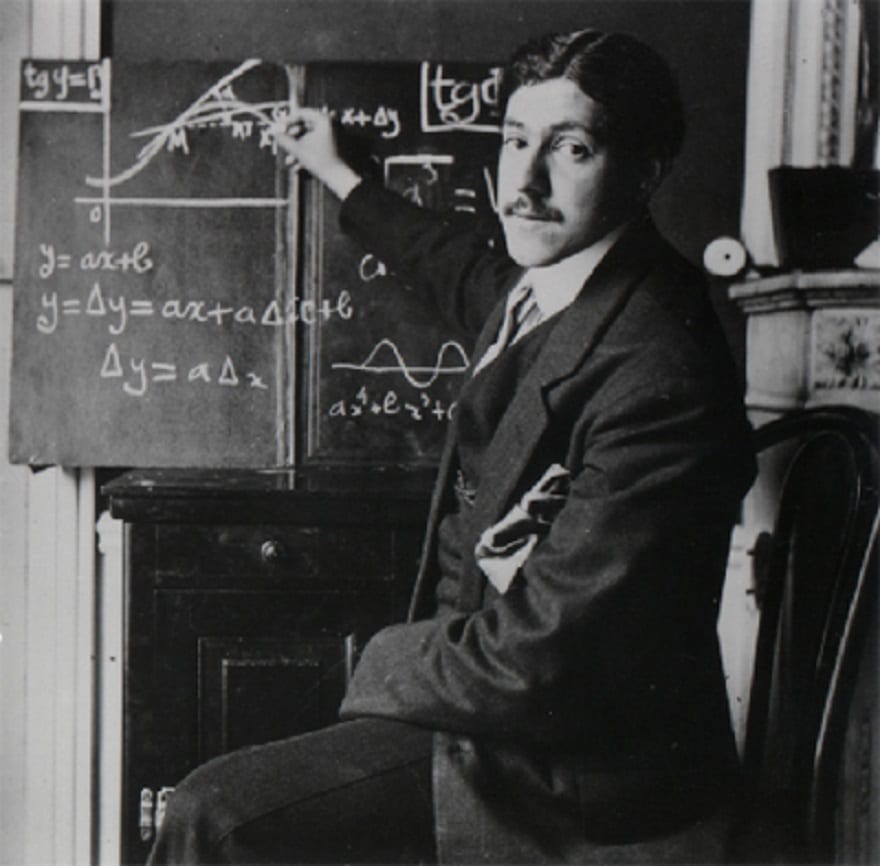
The man who built this empire was not born a Dassault. Marcel Bloch, the youngest of a doctor’s four children, was born on January 22, 1892, in Paris. His precocious interest in technological innovation became rapidly apparent — “One sunny day in the school playground,” he once recalled, “I looked up at the sky and saw a plane passing the Eiffel tower for the first time. I had never seen a plane before. There and then, I knew that aviation had become a part of my heart.” Dassault Aviation
He acted on that feeling with extraordinary precision. During World War I, Marcel put his engineering talents to work for France by creating the “Éclair” propeller with a fellow alumnus, a design that stood out from competitors due to its superior performance. Groupe Dassault He was a young man making weapons for a war he barely understood — and discovering he was very good at it.
In 1929, he founded the Société des Avions Marcel Bloch, which built both civilian and military aircraft. During World War II, Marcel Bloch refused to put his industrial resources at the service of the Nazi regime. Groupe Dassault The consequences were severe and personal.
Of Jewish heritage, Marcel was captured by the Nazis, stripped of his property and deported to Germany’s Buchenwald concentration camp, where he spent eight months for refusing to cooperate with the German regime. Bloomberg He survived. Most did not.
After liberation, he made a decision that was equal parts practical and symbolic. After the war, the family changed its name from Bloch to Dassault — derived from the French word for “assault tank,” it was also the alias used by Marcel’s brother, General Paul Bloch, who fought for the French Resistance. Bloomberg The new name was a tribute, a rebirth, and a declaration of intent all at once.
Building a Sky Empire
What followed was one of the great industrial comebacks of the 20th century. Marcel gained international recognition by creating the first French supersonic fighter jets — the Ouragan in 1949 and the Mystère in 1952. He continued to innovate by adopting the delta wing, which provided greater stability at high speeds. This silver arrow silhouette made the Mirage family, launched in 1956, famous worldwide. Groupe Dassault
Marcel himself explained the naming philosophy with characteristic wit: “It was in memory of a much-loved book of my childhood that I called my first supersonic airplane the Mystère. My Mirage airplanes, because of their attack and evasion capacities, are as invulnerable to enemy fire as a mirage is unreachable for a desert traveler.” Dassault Aviation
In 1963, the Mystère Falcon 20, the company’s first business jet, was chosen by Charles Lindbergh for Pan Am. Groupe Dassault The Falcon line remains in production today, one of the most respected business aircraft families in the world.
Marcel was also a politician and a media owner long before the family formally expanded in that direction. He diversified into newspapers and, in politics, became senator for the Alpes Maritimes department and representative for the Oise department. Dassault Aviation The pattern of aviation plus media plus political influence would define the Dassault template for generations to come.
Marcel Dassault died on April 17, 1986. His was the first funeral celebrated at Les Invalides for a French industrial businessperson — an extraordinary tribute from a nation that understood what it owed him. Dassault Aviation
Serge Dassault: The Expansion
Marcel’s son Serge inherited the group at 61 — an age when most men begin thinking about slowing down. He proceeded to spend the next three decades turning a great aviation company into a diversified empire.
Serge Dassault, born in 1925, was a prominent French engineer, businessman, and politician. A member of the conservative political right, he served as the mayor of Corbeil-Essonnes, a suburb of Paris, from 1995 to 2009. Mabumbe Like his father before him, he understood that industrial power and political power were best held simultaneously.
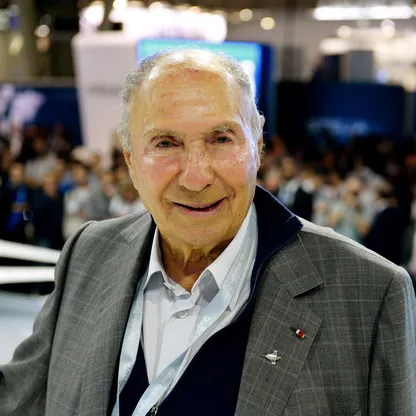
Under his watch, the family’s technology arm grew into something no one had anticipated. The adoption of 3D modeling in Dassault’s design offices led to the creation of Dassault Systèmes, which later became a global leader in industrial software. Groupe Dassault Today Dassault Systèmes is one of Europe’s largest software companies — and one of the most valuable assets in the family portfolio.
Then came the most overtly political move of Serge’s tenure. In 2004, the group acquired the French newspaper Le Figaro, marking its entry into the media sector. Mabumbe Le Figaro is one of France’s most prestigious and widely read newspapers, and its acquisition placed the Dassaults squarely at the intersection of manufacturing power, financial power, and editorial influence — a combination that made them deeply embedded in the French establishment in a way that few other industrial families could match.
Serge also fought tenaciously to maintain the long-cherished independence of the family-controlled company, rebuffing efforts by the Socialist Mitterrand government to nationalize the aviation business in the early 1990s. Bloomberg For the Dassaults, independence from the state was a principle worth fighting for — even when the state was determined to win.
Serge died in 2018 at 93, suffering heart failure at his Paris office. He had never formally named a successor. That omission would define the generation that followed.
Tragedy and the Third Generation
Control of Dassault Aviation passed to Serge’s four children — Olivier, Laurent, Thierry, and Marie-Hélène — but he had not named an heir to succeed him when he died. France 24 The absence of a designated successor left the group in the hands of four siblings with different temperaments, different ambitions, and, by some accounts, strained relations.
The eldest, Olivier, seemed the natural choice. Olivier once declared himself “the most qualified” of Serge’s four children, earning a stern public rebuke from his father. France 24 He was a pilot, a photographer, a composer of music, a reserve commander in the French air force, and a member of parliament. He was also, by all accounts, the one who most visibly embodied the Dassault spirit.
Then in March 2021, he was killed. Olivier Dassault, 69 and a father of three, died when his helicopter crashed near the upmarket coastal resort of Deauville in northwest France. The helicopter struck a tree shortly after takeoff from a private residence, and both Olivier and his pilot were killed. France 24
His sudden death shocked the political class and upset the family equilibrium, coming barely three years after the death of his father Serge. Lama Fortune French President Emmanuel Macron led tributes, calling it a great loss for the nation.
The Empire Today
Despite the turbulence at the top, the businesses themselves have never been stronger. The Dassault empire today rests on several pillars:
Dassault Aviation produces the Rafale — France’s premier multirole combat aircraft, now exported to Egypt, India, Qatar, Greece, and beyond — and the Falcon series of business jets, which command roughly 50% of the high-end global market.
Dassault Systèmes is the group’s most valuable asset by market capitalization, a world-leading provider of 3D design and product lifecycle management software used by industries from aerospace to pharmaceuticals.
Le Figaro remains one of France’s most influential newspapers, anchoring the family’s presence in national political discourse and giving them a platform that money alone cannot buy.
Artcurial is one of Europe’s top auction houses, handling fine art, classic cars, and collectibles at the highest levels of the market.
Château Dassault produces Saint-Émilion wines from a Bordeaux estate that has become a symbol of the family’s taste for quiet luxury alongside industrial power.
With a combined fortune estimated at around €32 billion in 2026, the Dassault family ranks sixth among France’s wealthiest — just behind the luxury magnates of Arnault, Hermès, Chanel, and Bettencourt, and ahead of other storied industrial dynasties. Lama Fortune
The Fourth Generation Takes Its Place
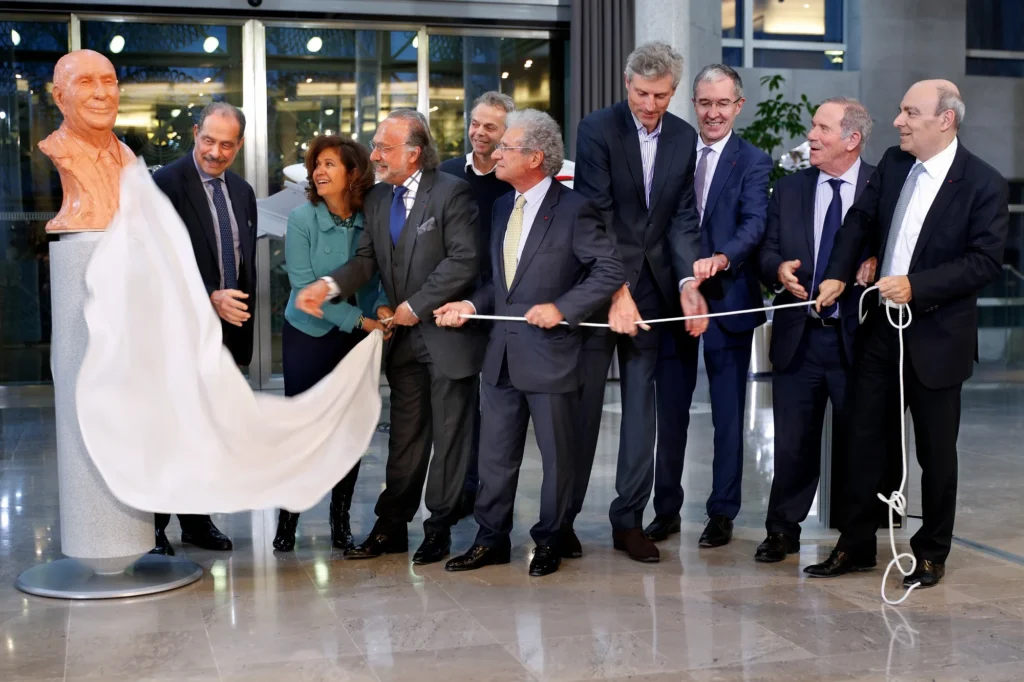
With Serge’s children now in or approaching their seventies, a generational handoff is accelerating. The changes at the top began in 2021 when fourth-generation Héléna Meilhan took the seat of her father Olivier, who had died in the helicopter crash. Laurent Dassault was subsequently replaced by his sons Julien and Adrien. And Thierry Dassault has been replaced on the supervisory board by his 32-year-old son Vincent. Crain Currency
The newest directors are the great-grandchildren of founder Marcel Bloch, who changed his name to Dassault after surviving the Buchenwald concentration camp in World War II. Crain Currency The circle of history is a striking one.
Governance today is collective, with a supervisory board and operational management entrusted to professional executives. Since Serge’s death, the family has relied on experienced managers to run the group’s businesses on a day-to-day basis. Lama Fortune It is a structure born of necessity — a family without a single designated heir learning to govern by committee.
A Dynasty Forged in Fire
What sets the Dassaults apart from most old money dynasties is the rawness of their origin story. They did not inherit mills or land. They built their fortune in the shadow of genocide, through sheer engineering genius and iron-willed independence from anyone who tried to take or control what they had made.
Marcel Bloch survived Buchenwald and came home to build supersonic jets. His name is now synonymous with French military power. His grandchildren sit on the boards of companies that span aviation, software, media, wine, and fine art. His great-grandchildren are now taking their seats at the table.
The Dassault name — chosen to honor a brother who fought in the shadows — has become one of the most recognizable in French industry. And the empire built beneath it remains, three generations on, entirely in the hands of the family that earned it at the greatest possible cost.
 Author